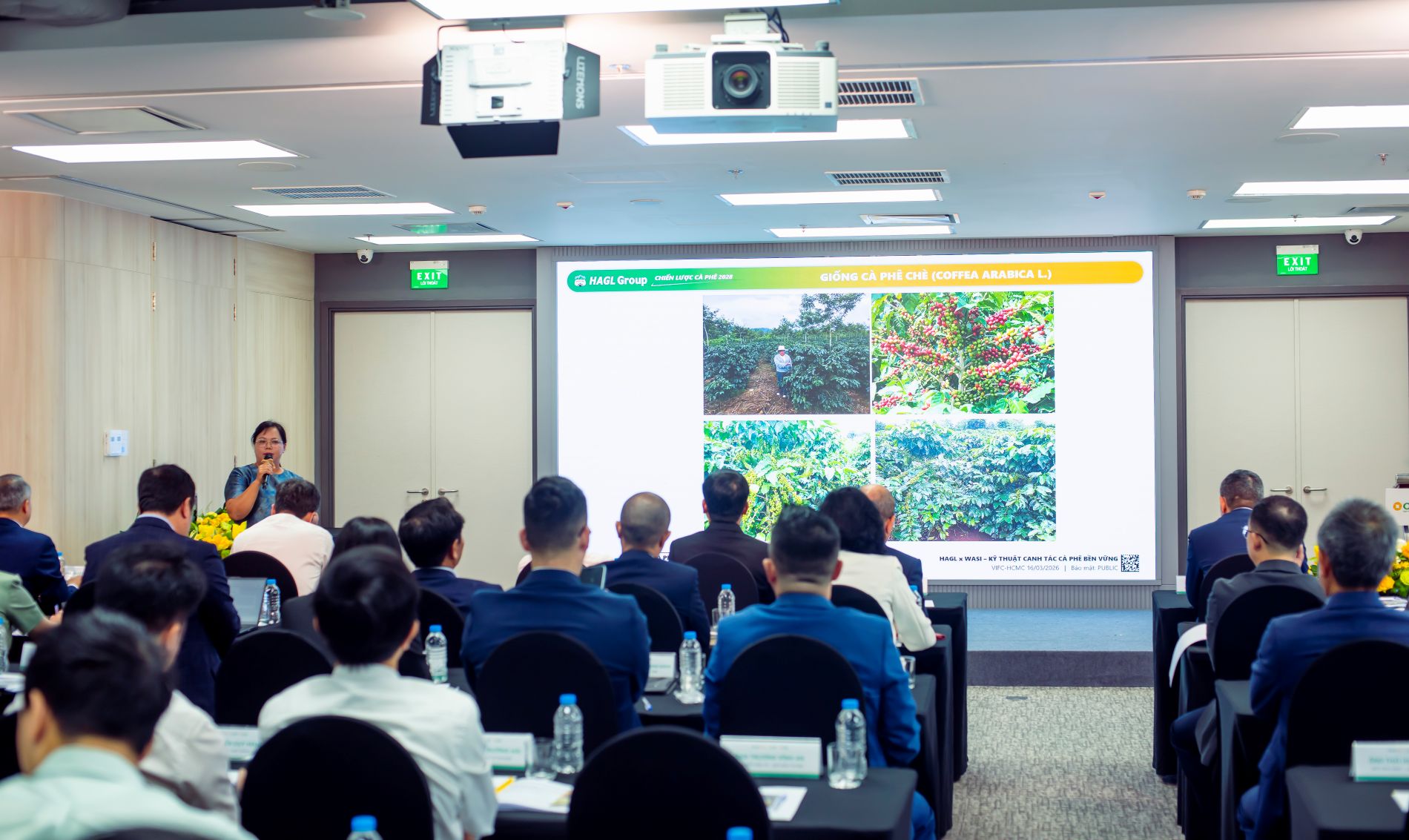
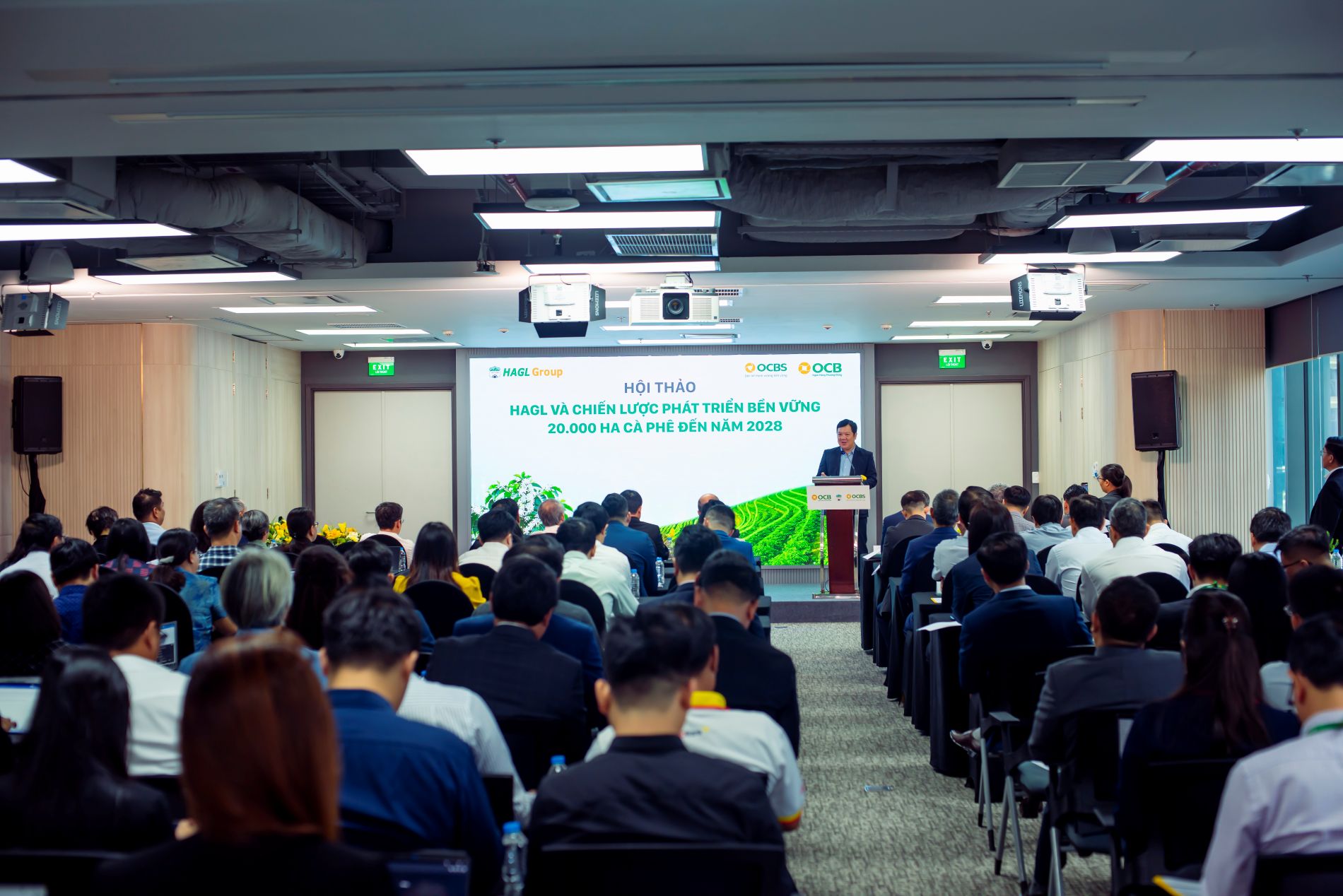
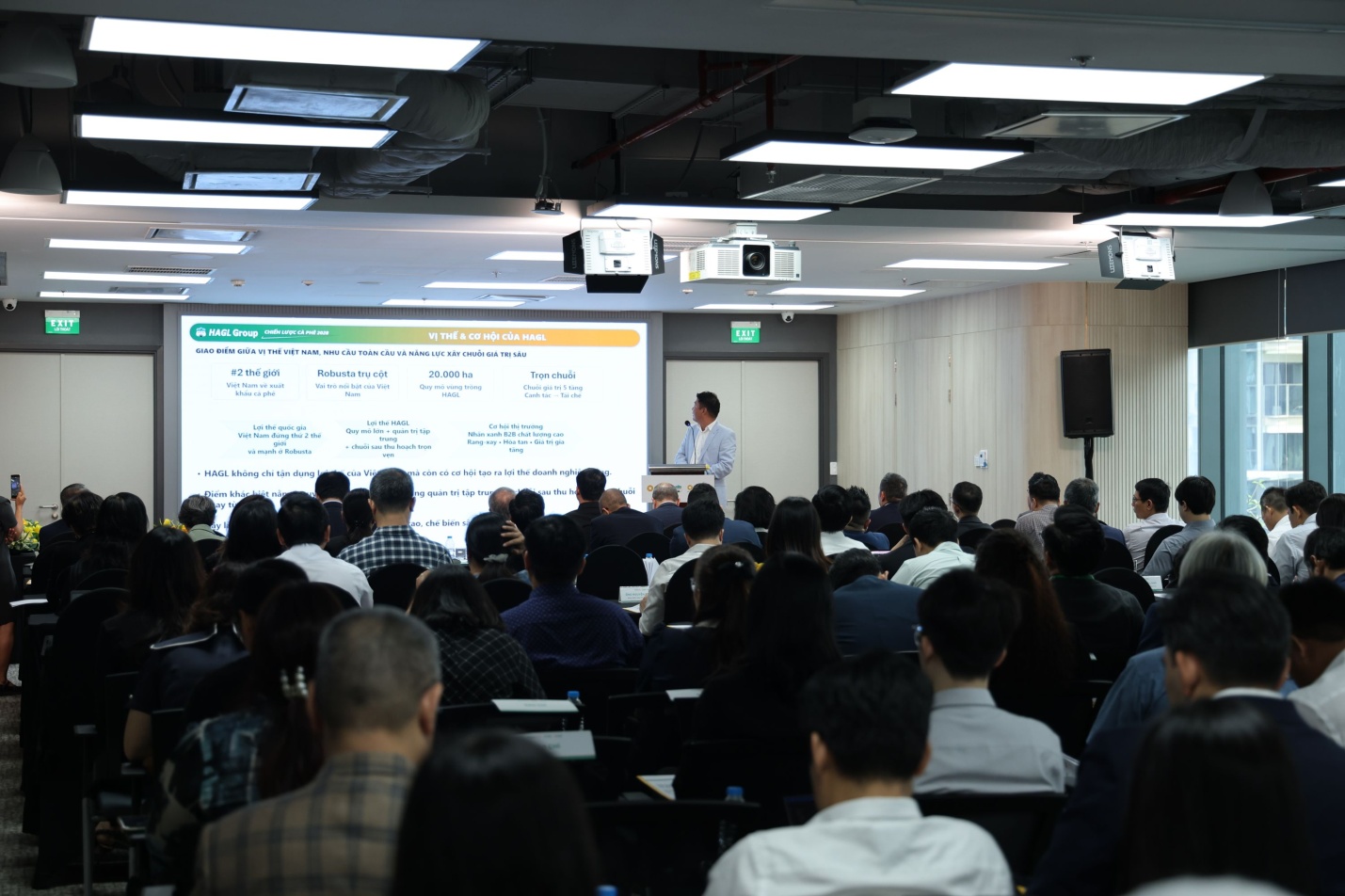
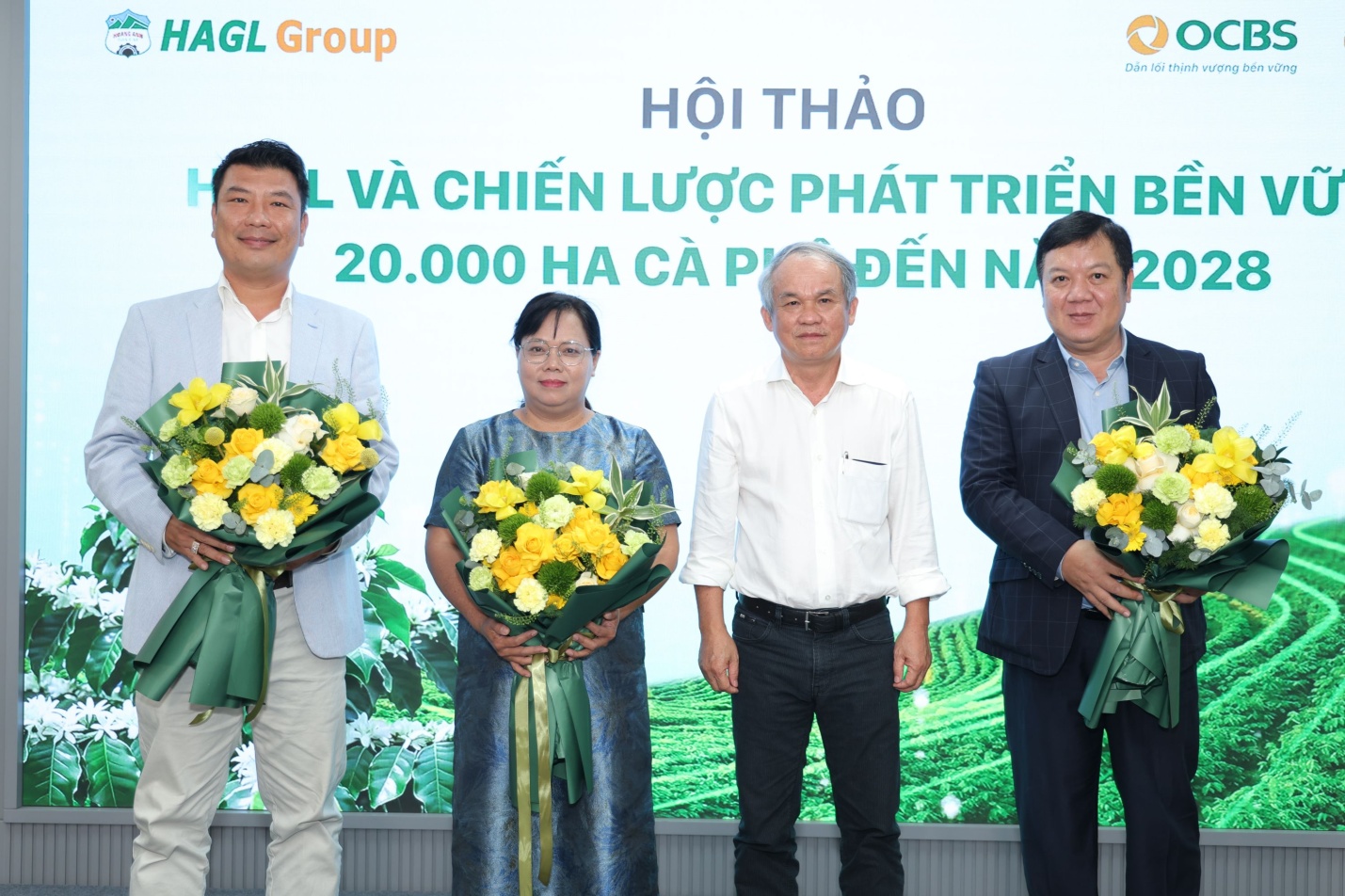
On March 16, 2026, at The Hallmark building – International Financial Center in Ho Chi Minh City, Hoang Anh Gia Lai Group (HAGL), in collaboration with Orient Commercial Joint Stock Bank (OCB) and OCBS Securities Joint Stock Company, organized the seminar titled “HAGL and the sustainable development strategy for 20,000 hectares of coffee by 2028.”
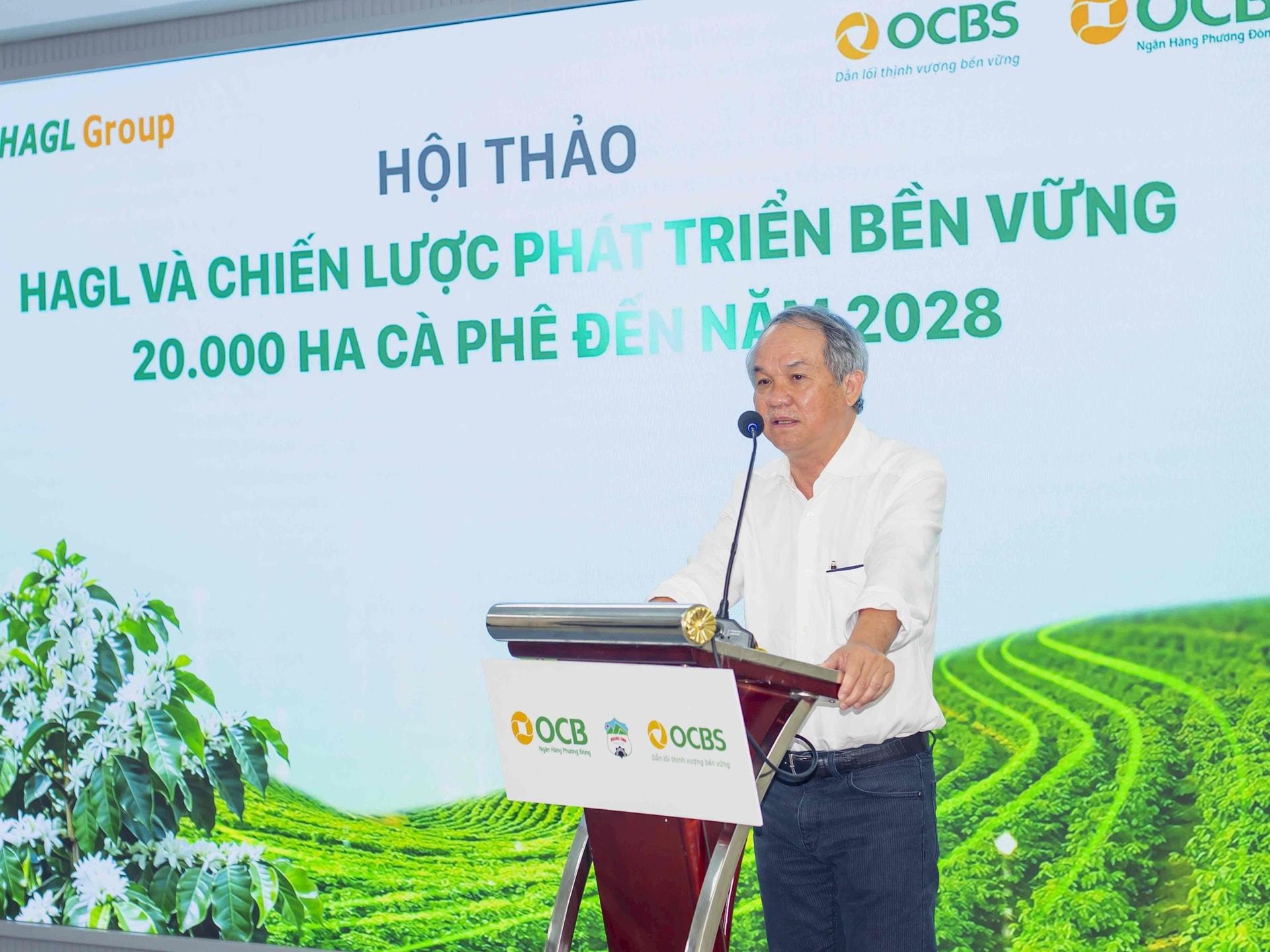
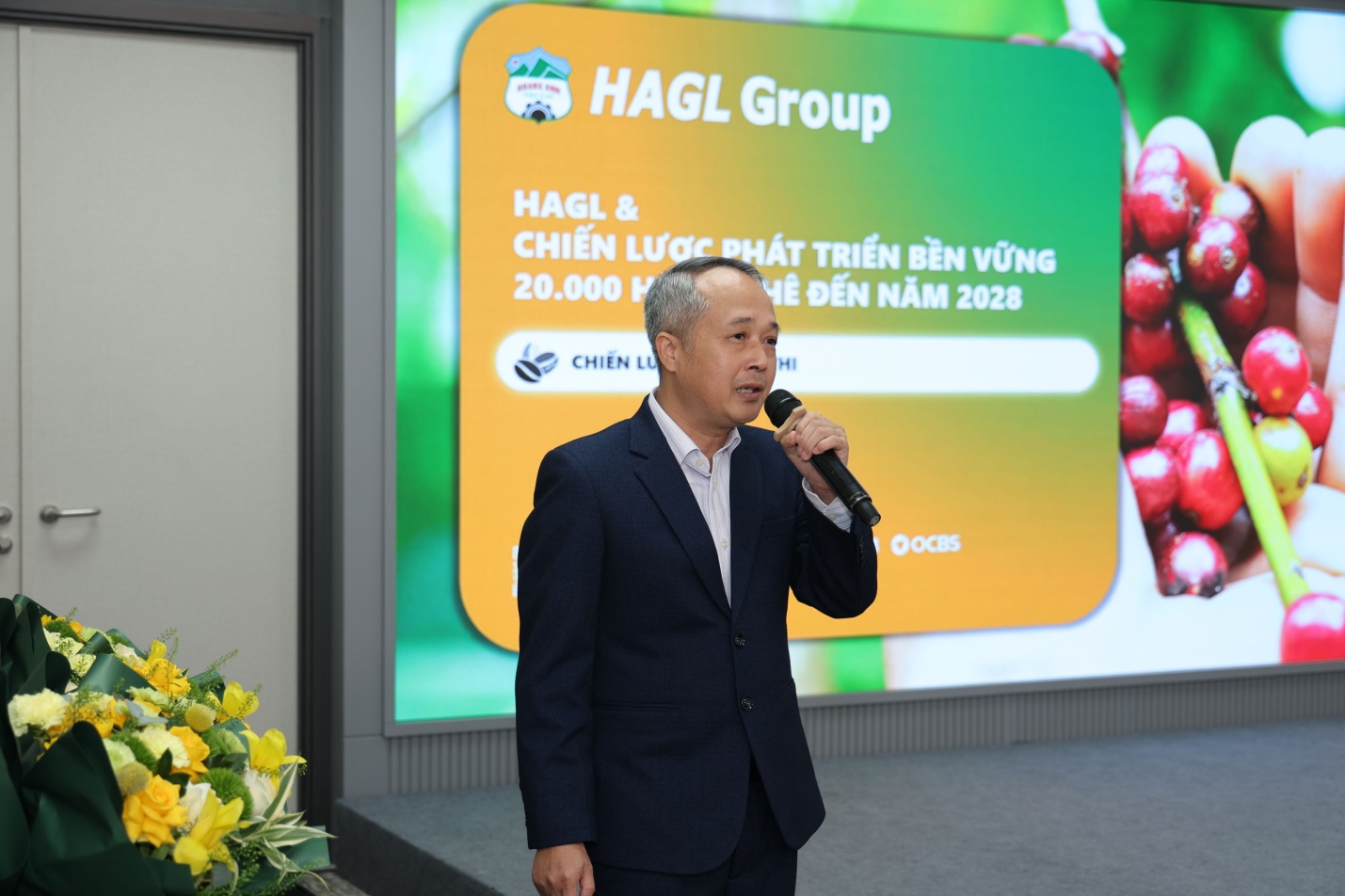
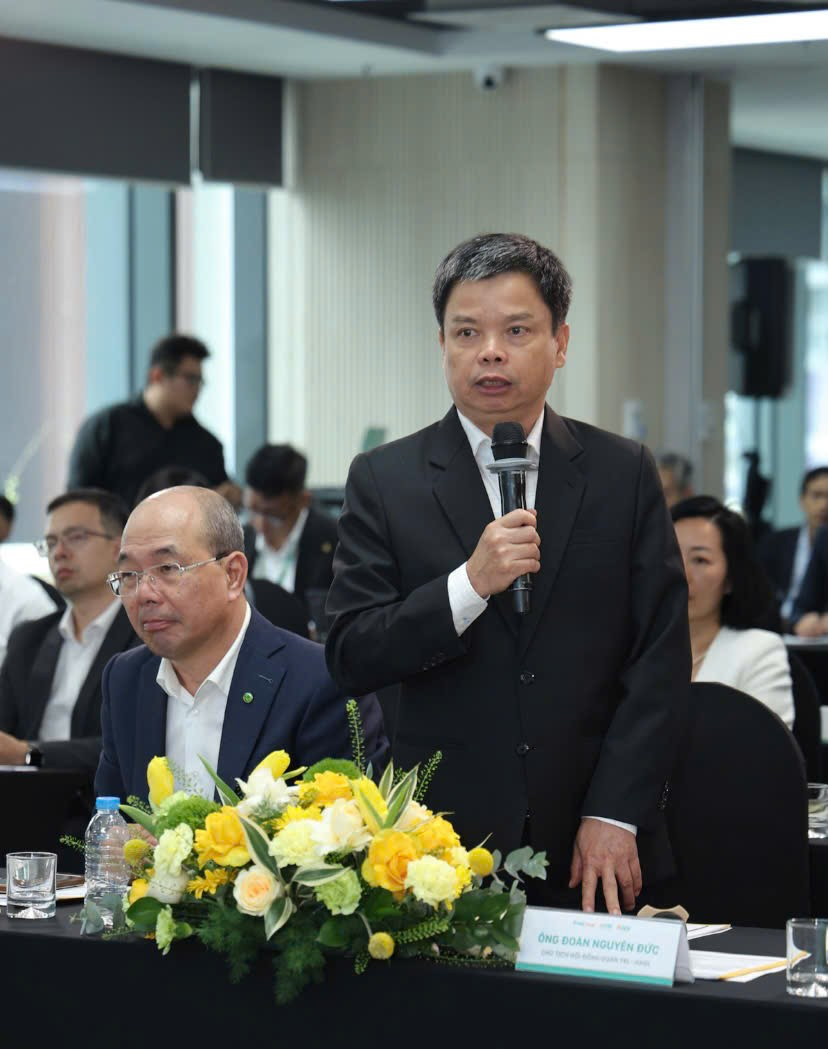
Mr. Doan Nguyen Duc, Chairman of HAGL, delivered a speech at the seminar
The event attracted more than 100 attendees, including leaders of Gia Lai Province, senior representatives from financial institutions, banks, investment funds, and especially experts from the Western Highlands Agriculture and Forestry Science Institute (WASI) and the Specialty Coffee Association (SCA).
At the seminar, leading experts and HAGL representatives shared insights on:
- • Sustainable coffee farming techniques
- • Post-harvest processing chains – the foundation for adding value to HAGL’s coffee project
- • Implementation strategies and resource planning
HAGL also announced its roadmap to become a direct manager of a large-scale coffee growing area of 20,000 hectares, applying a five-star value chain model to retain value at multiple stages, instead of producing raw materials for export.
Mr. Nguyen Huu Que, Vice Chairman of the Gia Lai Provincial People’s Committee, speaking at the seminar
Mr. Nguyen Huu Que, Vice Chairman of Gia Lai Provincial People’s Committee, also spoke at the event, affirming that the province will support HAGL in implementing the project. Gia Lai is actively reforming administrative procedures to attract major investors, especially in high-tech agriculture. The province has recently approved HAGL’s proposal for the investment and development of Mang Yang No. 2 Industrial Cluster, covering an area of 75 hectares in Hra Commune, Gia Lai Province. This industrial cluster is located near a planned expressway expected to be completed between 2028 and 2029, facilitating the collection, transportation, and deep processing of agricultural products from Laos, Cambodia, and Gia Lai for export.
Some highlights from the seminar: